
Hey Parra Fans, Welcome to this week’s edition of TCT Golden Point. This week, I explore whether the game’s evolving design is being engineered with sufficient regard for safety, sustainability and competitive balance from a due diligence perspective.
I thought it best with this one to start by prefacing a few things.
Firstly, this analysis is not an argument that rugby league is broken, nor a suggestion that administrators have ignored player welfare. The game’s safety mechanisms, for both physical and psychological injury prevention and treatment, have evolved consistently and significantly across the NRL era; largely through responsive action to identified risks; that is fact. However, good governance is not defined solely by how efficiently known risks are managed. It is defined by the consistency of pre-emptive analysis, ongoing review, and a clear commitment to reform; ensuring emerging risks are identified and mitigated before they materialise.
Secondly, while this analysis supports the RLPA’s position in this instance, it would be remiss not to acknowledge a recurring criticism: that a strong pro-player stance can at times lead to statements and actions that feel reactive, poorly timed, and disconnected from the broader legal and commercial realities of the game.
Lastly, while well researched, I acknowledge this analysis, like all my TCT contributions, is largely a subjective opinion piece. So please treat it as such, and feel free to disagree or provide your view in the comments. I love a good friendly discussion and/or debate about my thoughts as much as I love sharing them.
As always, I hope you find this insightful and engaging.

DUE DILIGENCE BY DESIGN: BALANCING SAFETY, SUSTAINABILITY AND SPECTACLE
Whether you’re a fan of the NRL’s recent rule changes or not, the reality is that they are significantly impacting outcomes to the detriment of close contests and have been implemented without sufficient trialling or longitudinal assessment. This suggests a concerning lack of regard for player welfare and places clubs on the back-foot with respect to understanding, managing and preventing implications. This extends beyond match play into training, affecting both attacking and defensive structures, and limiting a club’s ability to adapt safely and effectively to increased physical and tactical demands.
Last week the Rugby League Players Association (RLPA) released a Media Statement on the RLPA’s Process for New Rule Changes; its first public media statement specific to the 2026 rule changes since the season began.
The statement reiterated the RLPA’s dissatisfaction that the 2026 changes were publicised before confidential CBA consultation, and raised concerns that rapid adjustments to game speed and physical demands required proper trialling and adjustment periods for clubs. However, it stopped short of publicly speculating on the specific impacts of those changes.
They instead emphasised their routine request for a data-set from the NRL for the purposes of an intended analysis to be conducted collaboratively with the player leadership group. The data will detail injuries, game speed, and workload, which will form the basis for a 360-degree feedback mechanism back to the NRL.
The statements underlying message:
“New rules should not be introduced to fix problems created by other new rules. The impact that rule changes can have on player welfare is too significant for this process not to be treated as seriously as possible”.
The central proposition of this analysis supports the RLPA’s stance and is relatively simple:
- The people who play the game should be valued highly enough for safety to be proactively and intentionally prioritised over spectacle when reviewing, and prior to altering game design.
- Changes that materially affect workload and intensity should be trialled, data-tested and rigorously reviewed before being implemented in the competition.
- The NRL should adhere to, and be accountable for, its own obligations and standards to the same level it expects of players, clubs, and the RLPA.
Because in any high-performance, high-contact sport, proactive periodic safety assessment, sufficient testing and explicit transparency should be considered as a routine due diligence measure.
Duty of Care v Due Diligence — Related, But Not the Same
Discussions about player safety often default to “duty of care,” but duty of care and due diligence are not identical concepts; and understanding the distinction between the two matters:
- Duty of care concerns the obligation to take reasonable steps to protect participants from foreseeable harm. In rugby league, that obligation underpins everything from concussion management to dangerous contact rules.
- Due diligence goes a step further. It is the active, ongoing responsibility to identify hazards, test assumptions, respond to evidence and ensure control measures remain effective.
It is possible for organisational leaders and governing bodies to meet or even exceed core duty-of-care obligations through existing rules and protections, while still falling significantly short on the due diligence front.
For the NRL, due diligence at this point calls for a deeper review of how changes to the game itself may be creating or amplifying risk; whether those risks are being overlooked in pursuit of spectacle; and whether profit alone should be the primary measure of the game’s long-term sustainability.
This position reflects a broader reality: in dynamic systems, particularly those intentionally designed to be faster, more continuous and more physically demanding; emerging risks must be actively identified and monitored, and existing safeguards must be periodically reassessed.
Inherent, Avoidable and Systemic Risks – Related, But Not the Same
As with duty-of-care and due-diligence, not all risks are the same:
Inherent Risks: Collision, contact injuries and physical fatigue are inseparable from the sport itself. Players knowingly accept those ordinary risks as part of participation.
Avoidable Risks: Poor technique, foul play, inadequate recovery protocols or preventable overload can sit in this category. These are risks that game rules and safeguards aim to reduce.
Systematic Risks: Perhaps the least discussed category, these are risks arising not from individual error, but from how the game is designed or regulated. They can emerge through rule interactions, incentives, workload demands, pace of play or cumulative fatigue.
This is where debate around the modern game becomes more nuanced. Questions about six-again, compressed defensive workloads, interchange pressures or cumulative fatigue are not necessarily claims that any one rule is unsafe. They are questions about whether combinations of rules may unintentionally create conditions worth reviewing.
As prefaced, the NRL’s current systems and mechanisms manage inherent risks reasonably well, but fall short in terms of proactively identifying emerging risks, as well as mitigating avoidable and systemic risks created by the evolving design of the modern game. That distinction is important because systemic risks are often harder to see, precisely because they tend to be normalised. They can feel like “that’s just footy” until evidence, or serious injury suggests otherwise.
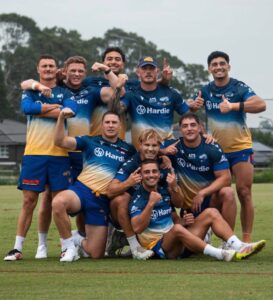
Assets worth protecting – Source: Parramatta Eels RLFC
Safety, Sustainability and Spectacle — It’s Not a Contest
The rapid implementation of rule changes this season has increased game speed and continuous play, with growing implications for player health and safety. At the same time, it has driven headlines and arguably reduced the frequency of close, competitive contests. The result is a game that lends itself to a drama-driven, commercially appealing spectacle: more tries, more injuries, more controversy, and more scrutiny of officiating. That cycle fuels larger crowds, scarcer tickets, surge pricing, and increased media engagement. The simplified formula: more clicks, more views, more revenue. But as the spectacle grows, so too does discontent. The question is not whether it is profitable, but at what cost.
A common misconception is that prioritising safety comes at the expense of entertainment, and that profit alone is the strongest indicator of sustainability. In reality, the best sport has always balanced safety, sustainability and spectacle where possible. These are not opposing forces, and applied well, they reinforce each other. A game players can endure, recover from and trust is more likely to remain fast, skilful, and compelling in the long run.
Similarly, good governance does not destroy the spectacle; it refines the conditions that allow skill, speed and strength to flourish without avoidable harm overwhelming the product. Some of the NRL’s most engaging elements have been supported by safety-minded evolution. The prohibition of shoulder charges and stricter concussion protocols were not introduced to soften rugby league, but to preserve players and sustain the contest. Few would argue today that removing the shoulder charge diminished entertainment; if anything, it elevated technique and reduced reckless collision as spectacle.
Furthermore, safety and sustainability should be reviewed with consideration for one another, so each can inform the risk profile of the other with their combined viability, acting as the benchmark for whether changes to the game are appropriate. The key question is not only whether players are protected, but whether the system itself is operating as safely and sustainably as intended. Get that balance right, and spectacle will follow.
In contrast, when spectacle is prioritised without equal regard for safety and sustainability, the consequences can be significant. History shows that decisions driven by speed or appearance, rather than balanced risk, can expose underlying vulnerabilities at precisely the moment they matter most.
Global Sport and Cross—Code Examples
For much of its history, Formula One pushed the limits of speed, track design, and risk tolerance, often learning only after serious harm occurred. Many of the sport’s most significant safety advancements — including the halo device, virtual safety cars, and improved barrier systems — were not proactive innovations, but reactive responses to tragedy. These events highlighted that dynamic, high-performance environments, failing to continuously reassess risk in favour of spectacle is counterproductive to change and increases ongoing risk. Over time, that approach creates not only safety consequences, but reputational, legal, and governance risks that far outweigh any short-term entertainment gain.
The NFL offers a useful comparison. Rule changes protecting quarterbacks and defenceless receivers were criticised by some as overcorrection. Yet they helped preserve elite playmakers, extended careers, encouraged offensive creativity and arguably contributed to a more open, attractive product. Protection did not kill spectacle; it shifted where spectacle came from.
A cross-code example is World Rugby’s tackle-height interventions. Though controversial, the intent is clear: reduce head trauma while preserving continuity and skill. The wager is not safety instead of spectacle, but safety in service of the game’s sustainability.
Player Welfare Consultation, Not Just Respectful Regulation
If player safety is partly a governance issue, it is also inevitably a consultation issue.
This is where the RLPA has an important role, as a players’ association does not exist merely to respond after harm occurs or advocate for player rights. Its value also lies in elevating lived experience, questioning assumptions and ensuring those exposed to risks have a meaningful voice in how those risks are assessed. That is why an RLPA-led focus on welfare, consultation and evidence should not be seen as escalation, but as responsible participation in governance.
The data-set the RLPA has requested from the NRL, while routine in its timing, would be the perfect foundation in consultation for a collaborative discussion around:
- Seeking stronger fatigue data.
- Commissioning an independent review.
- Testing whether player experiences align with injury trends.
- Asking whether current controls remain fit for purpose.
None of that is radical, it is evidence-led risk management. Most importantly, the objective need not be immediate rule change, it may simply be more reliable data, which usually leads to better decisions.
The strongest competitions are not those that ask players to absorb escalating risk for the sake of the show. They are the ones that understand the show depends on protecting the people producing it.
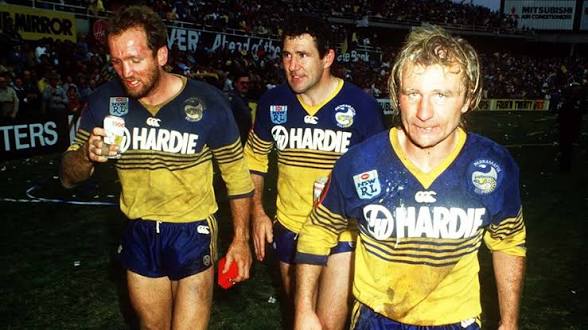
A history worth preserving – source: Parramatta Eels RLFC
Evidence Before Escalation
Perhaps the strongest case for a safety review is that it prioritises evidence before conflict. Rather than framing debate as administrators versus players, or welfare versus spectacle, a review creates space for structured inquiry:
- What do injury trends suggest?
- What does fatigue research indicate?
- Have the new rules brought unintended implications?
- Are current controls proportionate to emerging risks?
These are empirical questions, and empirical questions deserve evidence-based answers. A safety review would not presume these risks are unacceptable, only that they are worth testing.
For mine, an independent or jointly supported safety review; led by the NRL, informed by the RLPA leadership group, and in consultation with clubs; would not signal crisis, it would signal unity. Because strong systems are not those that resist scrutiny, they are those confident enough to invite it and humble enough to accept that change is required.
An intentional and integral holistic review of the games evolving design; not as a concession to caution, but as an investment in sustaining intensity and balancing momentum; could improve quality by keeping fatigue driven error, preventable injury and attritional breakdown from overshadowing any spectacle the original changes sought to promote.
Final Thought: A Game Worth Defending – Players Worth Protecting – Fans Worth Respecting
My advocacy for a collaborative safety review ultimately reflects a considered, but inherently subjective perspective.
It is not intended to suggest rugby league is inherently unsafe, nor that the modern game has failed. It is simply expressing the view that a sport sophisticated enough to engineer performance should also be willing to periodically test whether its design remains safe, sustainable and competitively balanced.
Players are people, not expendable inputs to be consumed in service of a commercial spectacle. They are fundamental contributors to the game and should be valued and protected accordingly.
Fan experience is an important consideration in all this too. In consultation and review, fan contribution to the games sustainability and spectacle should be viewed as more than a revenue stream, because fans are central to the game’s identity and atmosphere.
At the end of the day, the true measure of due diligence and good governance lies in intent and motivation. Data and performance matter, but they are ultimately shaped by what those in control choose to prioritise, value and protect.
See you at the game on Saturday.
Roly-Poly Parra


Another good read Roly,
I hope the RLPA do push this.
PVL ball needs to be stopped in its tracks.
Hi Miria,
TBH it was a bit messy earlier as I forgot to take out my scrivener editing notes and deletions in two parts. Sigh
But it reads pretty well now. Thanks for the support.
Tks Roly, great work, and it is only subjective because the evidence-based process has yet to occur. I am critical because we are not getting good data and quality analysis on 6 Agains, for example. One gets the feeling there is some type of,let’s say, restriction on this, when it would be simple to collate some data sets each game. Channel 9 offers a ‘time since last stoppage’ and Andrew Johns seems to be diplomatically, but based on hard spent years on the park,in awe of the energy sapping passages in play. So we’re probably shaping up for some official review sooner than later. If a problem that causes damage is publicly discussed, the creators of that problem eventually call their lawyer, it’s just that this ‘problem’ resides in the most brutal team sport in the world.
Thanks so much BDon, It will be interesting to see how the data-set is provided and whether the data is cleaned before being handed over. I wouldn’t trust an internal report given the current state and scrutiny of the situation.
I spent a big chunk of Tuesday researching how the data might be provided and what grounds the recipients might have if it’s contaminated. It looks to be in the form of a report which means it will likely be watered down. But that doesn’t stop a retrospective raw data request through the appropriate jurisdiction. It would still be deidentified to ensure it meets the provisions under the privacy act but a supbeona would ensure the deidentified data is raw and integral.
That’s a good read thanks. Appreciate the effort and thought put into it.
Plenty has been written and said about the impact of 6-Again and its impact. Data driven impact is certainly now required. Granted you need time to build up a sufficient data set (hence why it should have been tested), but there is over 60 games of data now.
The RPLA needs a stronger back bone. PVL has shown contempt for them from day dot, and they continue to let him walk all over them. Bullies need to be stood up to.
You also talk about the unintended consequences of new rules and the conflation of multiple new rules and the unintended outcomes that can occur. I have another.
So we have a six again rule that is, lets say potentially creating more risk of injury.
Those injured players need to be replaced. When teams start to run out of players they have to call up players who sometimes have never played in the NRL – never played at the same pace and same intensity. Those players are immediately at greater risk of injury than a seasoned player, particularly if they have to play week in and week out due to injuries. So now you have created more risk.
Now add 2 more teams. 60 more players. Inevitably some of those players will be older players who would have otherwise been forced to retire and who are passed their physical best, and youngsters, not yet fully developed. It is indisputable that the difference between the best most physically and mentally capable players and the least physically capable players is going to be greater. Greater disparity equals greater injury risk.
The game is very quickly heading down a very dangerous path.
BA Sports, this is an outstanding reply to an outstanding post. That increased involvement and demand on less experienced players will indeed be a greater injury risk.
Thanks Sixties, BA and BDon are regularly good value in the comments of my posts. Always supportive and bring something interesting to the table that adds value and context; it’s very motivating.
This one took a bit of extra hustle (researching, writing, especially editing to ensure compliance). Though since I am writing about things that impact Parra for Parra fans, it doesn’t feel like work, it’s like a reward I get to do after I have done my work. Also, with ongoing access to university journal databases from my post-grad studies, I am able to strengthen my opinions and ideas with credible research, making my perspectives more reliable (for my audience and my own piece of mind; an element sadly lacking in news writing since the arrival of the digital age.
Sometimes I worry my pieces are too assignment like as that’s how I have to write for work; but I think the key as to why it works is my motivation. A lot of fans create content for popularity and incentive. That doesn’t interest me, I just love Parra and writing and I think TCT is the most reputable site for a fan to fulfil that interest.
Appreciate your and Forties support for what I am doing.
Roly,
For mine, keep writing the way you are. Your posts are well presented and, as I’ve said previously, make you think about the game in a different way. I really enjoy them and remind me of my favourite days at work where we would analyse, assess and debate various issues. It’s just fun.
When combined with the other TCT contributors if gives us, the viewership, so much more to read, think and comment about! That said, I feel I need to read this one over a few more times, just to get my thinking straight, before commenting on the actual subject. Unlike when working I can do that with a glass of good red to help clarify my thinking.
Cheers.
Don’t change how you write Roly, your content is well researched, thorough, thought provoking and well worth a read. We’re lucky to have you writing for our fans and club, keep the content and articles coming, I enjoy the read
Thank you Mike, I appreciate the support and encouragement. It’s very motivating when so much work goes into it, though like I said in other comments it doesn’t really feel like work, more like a bonus. I have a couple more good topics in the works atm and lots of ideas so hopefully I can continue contributing for a while yet. Probably set for a Thursday release this week if all goes well. Thanks again.
Wonderful. Looking forward to reading them
Thanks BA. Writing for TCT is really important to me so I appreciate the feedback.
There will be a mountain of data and I hope the RLPA is brave enough to push the point and fight for change. I believe they would have a case if they can garner the right information from the data and some good minds around them.
Would have loved to say more re the actions of Pesky P, but I have to tread very lightly with direct statements in that space for professional reasons. But you’ve pretty much nailed it. The sad thing is, people don’t respect him, they fear him.
Roly,
I posted thoughts around Evidence V escalation. However, after hitting post they disappeared into the ether.
Too long for an old chap like me to do again. Suffice to say as I have before a good thought provoking piece.
Hey Namrebo! Great advice as always, particularly regarding the writing style and general direction. I appreciate the support.
I understand the frustration of writing a long comment and having it disappear too, on this platform and in general. Last week I lost a whole days work somehow, Technology can be temperamental for me too.
Re evidence versus investigation. I think the next steps all stem from the quality of data provided. If it’s good I think RLPA will move forward with a review; if it’s been watered down they may use that as justification for launching formal action.
I don’t know what’s going to happen, but I think this is going to get a lot bigger in the near future and will eventually change the administration, direction and longevity of the game. Retrospectively it will be viewed as good disruption but atm like Parra with Zac it will be seen as insubordinate disruption because the powers perceive invincibility and are treated as such out of fear. It’s toxicity in its purest form really.
Here’s to the return of integral, competitive contests….. one day.
Pingback: TCT Golden Point – 31 May 2026 – The Executive Exit, the Power Shift, and the Corporate Minefield – The Cumberland Throw