
The Story That Couldn’t Wait
The Parramatta winger’s roadside drug test was preliminary. A CODE Sports headline is far more definitive, and the commercial consequences of some allegations may not be easily undone.
On September 8, Josh Addo-Carr received Parramatta’s Ray Price NRL Community Award.
Three nights later, police stopped him on Enmore Road in Newtown. A preliminary roadside drug wipe allegedly indicated cocaine.
By Saturday morning, the allegation was making headlines. On Sunday, JAC Motors terminated its sponsorship of the Eels winger.
That partnership had an almost absurd detail. Addo-Carr shared his initials with the car manufacturer, and in March he had unveiled a customised JAC Hunter ute, complete with a lift kit, upgraded lighting and a distinctive paint job.
The association had seemed made for him. Now it was over.

The forensic result would take another seven weeks. On November 2, NSW Police confirmed that no drugs had been detected in Addo-Carr’s oral-fluid sample and no further action would be taken.
On November 10, the NRL Integrity Unit closed its investigation, clearing him to return to Parramatta training.
By then, some of his commercial relationships had already ended.
I’ve spent enough years working in sports journalism to understand why the original allegation attracted attention. A former Australian and NSW winger, previously sacked by Canterbury following a confirmed positive drug test, had apparently found himself in trouble again.
Any sports editor would recognise the significance. I’d have been interested, too.
And I might well have written one of those headlines.
What The Headline Says
By Saturday, the allegation was being reported across Australia’s major news outlets. But the headlines didn’t all convey the same degree of certainty.
The ABC’s headline included the word allegedly. Its reporting explained that forensic analysis remained outstanding.
News Corp’s CODE Sports labelled its report an exclusive. The current online version carries a considerably more definitive headline:
Eels winger Josh Addo-Carr records positive drug test, faces sacking
The standfirst goes further, stating that Addo-Carr “has tested positive to cocaine” and linking the incident to the positive test that ended his Canterbury career.
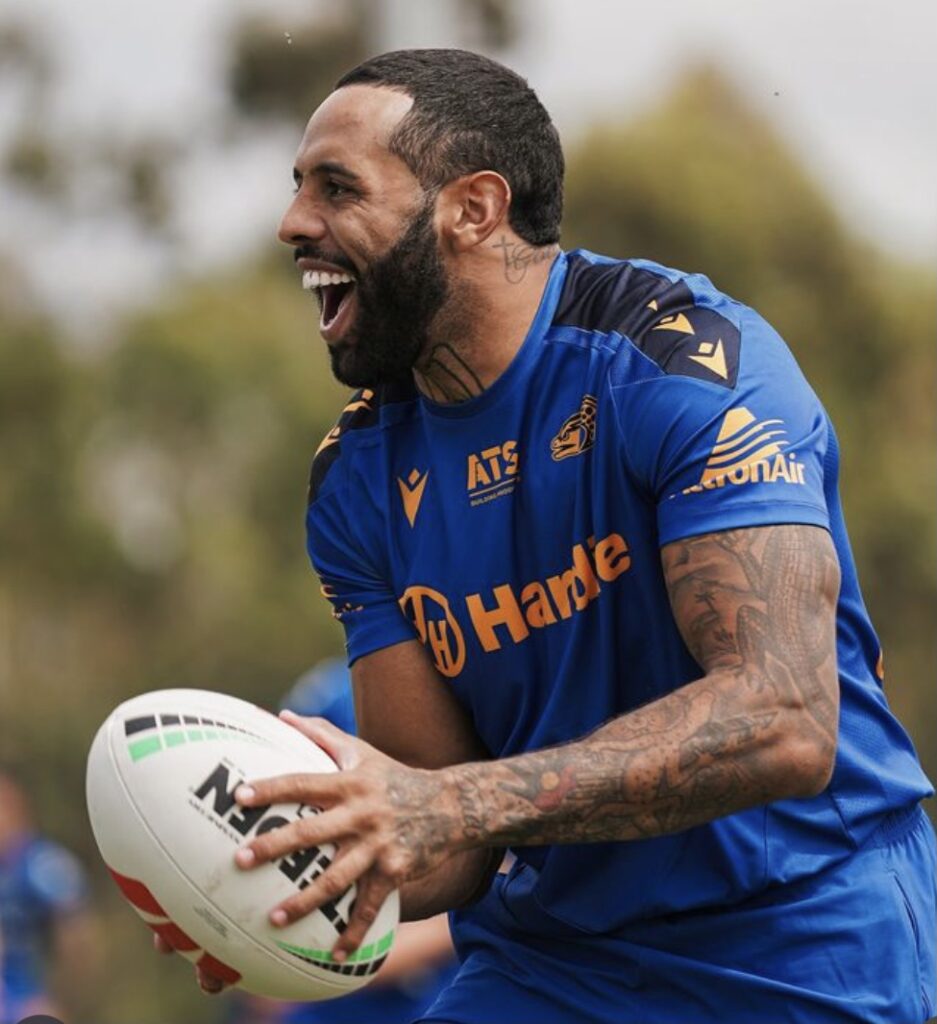
Josh Addo-Carr bringing energy to Eels training.
The article later explains that the roadside swab was preliminary and forensic testing remained outstanding. But neither the headline nor the standfirst makes that distinction.
And the prospect of Addo-Carr being sacked is part of the headline.
Given his history, that was hardly an unreasonable possibility to report.
But there was a difference between reporting that Addo-Carr faced an uncertain future and presenting the latest test result as established.
The problem with headlines is that they increasingly have a life independent of the journalism beneath them.
They travel through social media feeds, notifications, search results and conversations. People repeat them without reading the accompanying report, sometimes with no reason to read beyond the headline.
I don’t think journalists should have ignored the allegation until the forensic result arrived. Addo-Carr’s history made it newsworthy, and his footballing future was genuinely uncertain.
But if the preliminary nature of the test is essential to understanding it, that belongs in the headline.
There’s also an unresolved question about how the roadside indication became public so quickly. The available reporting doesn’t establish who first disclosed it or whether that disclosure was authorised.
I’ve worked in newsrooms where competition for stories was fierce, and deadlines were unforgiving. I know the pressure to move quickly, particularly when another outlet has information you don’t.
I also know that journalists make choices about what deserves prominence.
Two Tests, Two Very Different Outcomes
Addo-Carr’s history complicates any argument that he was treated unfairly.
In September 2024, while playing for Canterbury, he was stopped by police and returned a preliminary positive roadside drug test.
Bulldogs football boss Phil Gould initially insisted the test was negative, based on his understanding of events.
Subsequent forensic testing confirmed cocaine.
Canterbury terminated Addo-Carr’s contract, citing both the confirmed result and concerns about his lack of transparency with the club.
Parramatta knew all of that when it recruited him. The circumstances of his departure from Canterbury were also public knowledge when JAC Motors signed him.
In 2024, a preliminary account was understood to mean Addo-Carr had been cleared. He hadn’t.
In 2026, a preliminary indication was widely reported as another positive test. Forensic analysis subsequently found no drugs.
The same testing process was misunderstood in opposite directions.
Addo-Carr’s history made renewed scrutiny inevitable, but it told us nothing about what happened on September 11.
The Decision JAC Motors Made
JAC Motors announced the immediate termination of its sponsorship on September 13, saying the allegations and reported behaviour were inconsistent with its standards.
The company had a legitimate concern. For a car manufacturer, an ambassador facing an allegation involving drugs and driving presents an obvious reputational risk.
Sponsors aren’t courts. They don’t have to establish guilt beyond reasonable doubt before making commercial decisions.
But JAC Motors signed Addo-Carr after he departed from Canterbury, and the circumstances were already public.
The new information was a preliminary screening indication.
I think the company acted too soon.
Suspending promotional activity pending forensic testing would have been a defensible response. It would have protected the company without requiring a final decision on incomplete evidence.
Contractual considerations may have gone beyond what JAC Motors publicly disclosed. But the distinction between an allegation and a confirmed result should have mattered.
According to the Sydney Morning Herald, the allegation affected existing and prospective sponsorship arrangements worth an estimated $400,000, involving brands including JAC Motors, Nike, Rexona, Red Bull and DoorDash.
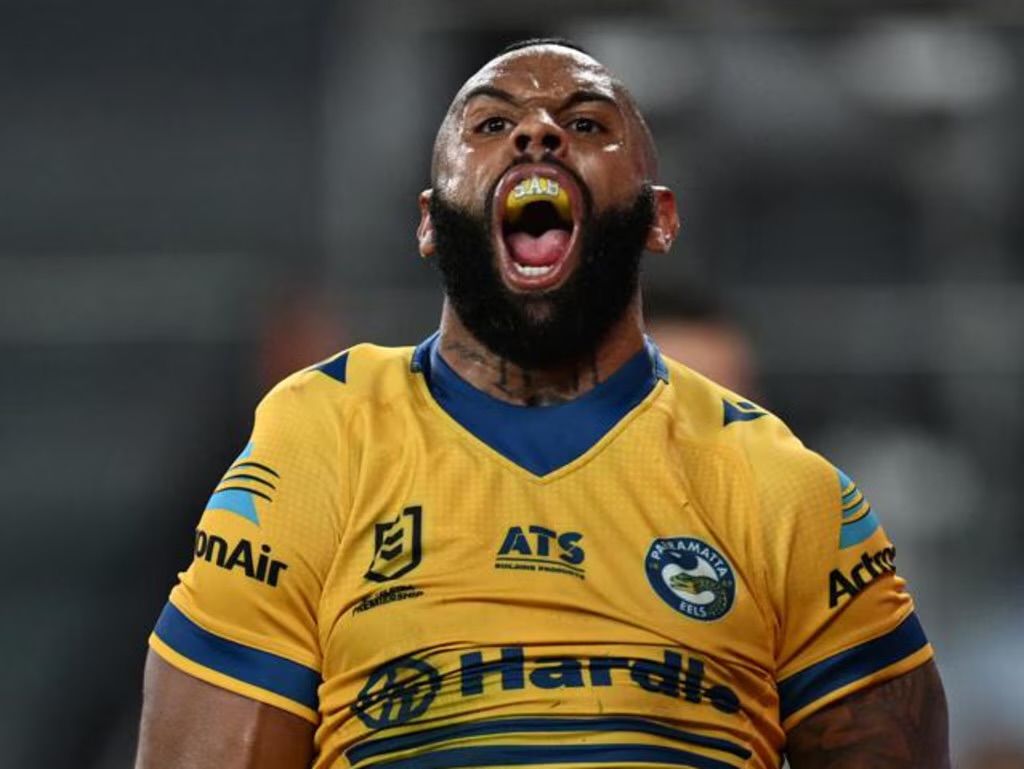
The on-field Foxx energy
Some of those arrangements were prospective, so the figure shouldn’t be confused with guaranteed income subsequently lost.
The commercial impact was nevertheless substantial.
Parramatta faced its own decision and took a different course. The club issued a breach notice and allowed Addo-Carr and his representatives to respond, but stopped short of terminating his contract while forensic testing remained outstanding. It subsequently decided to retain him after the negative result.
His lawyer, Elias Tabchouri, has praised both the Eels and the NRL for how they handled the matter.
Seven Weeks Later
The negative result was widely reported.
The Herald, ABC, Nine and Fox Sports all reported it. On November 3, the Herald published Adrian Proszenko’s account of the estimated $400,000 cost to Addo-Carr’s commercial interests.
It would be unfair to suggest journalists ignored the result once it was available.
But seven weeks passed between the preliminary indication and the forensic finding. Commercial decisions were made during that period. Addo-Carr’s future at Parramatta was repeatedly debated, and another reported positive drug test became part of his public reputation.
The later reporting corrected the factual position. It couldn’t necessarily reverse the consequences.
CODE Sports — September report, headline in the current online version
Eels winger Josh Addo-Carr records positive drug test, faces sacking
The Sydney Morning Herald — November 3
Addo-Carr reveals financial cost of false-positive drugs test
Jane Aubrey
( Jane Aubrey is a sports journalist and writes and publishes States of Endurance, an independent publication examining sport, reputation and endurance.)

This is a very thoughtful article and emphasises the importance of letting due process take its course before rushing to condemnation. As well, a bit of compassion doesn’t go astray, especially for those who have bled and been bruised carrying our colours.
In general I’m impressed by the way Joshua takes care of himself physically; he looked absolutely terrific when he turned up to speak with the board. I believe that he will be one of those playing to a high standard late into his thirties.
Let’s hope JAC Motors and any other anticipated sponsorships do the right thing and reinstate their deals…..it is a courageous thing to admit your wrong and the company’s that come’s out and say’s so will only benefit by the admission.
I live in Qld and am unlikely to ever deal with JAC Motors, but if I lived in Sydney, i would be going to JAC Motors with an offer to trade/upgrade my vehicle that pulls a boat with them, providing they look carefully at what position they have placed themselves in with one of the most popular if not “the” most popular player in our football team!
It’s up to these individual companies and sponsors to do what they want. They obviously didn’t want their brand tarnished regardless of the outcome 7 weeks later and going off recent history, they decided to cancel their sponsorship. A lot of damage can be done to a brand in 7 weeks.
JAC has made plenty of money during his football career and will continue to do so. I’m pretty sure he will pick up new sponsors in the near future and I’m also pretty sure he’ll be just fine!
If I was his sponsor and going off what happened just over 12 months ago I would have pulled my collaboration too.
Generally a fair and factual piece. Journo’s reported something newsworthy. Do some outlets like CODE Sports go too far with hyperbole to generate more controversy? Yep. Its what they do and enough people in society lap it up unfortunately.
If i were in JAC Motors position, i could see myself doing the same thing. Maybe if the incident happened next week, when fewer people are paying attention, you might let it play out, but I can’t condem them for making commercial deicisons based on the facts and the facts were JAC was carrying negative publicity.
What doesn’t get mentioned in this piece, is that JAC voluntarily put himiself into rehab. That was being reported on the 14th – so basically he did that immediately. One doesn’t tend to put themself into a rehab clinic if they have nothing to rehab from. It was essentially an admission that (whether or not he had it in his system at the time of the arrest), he still uses. For that reason alone, I would do what JAC Motors did 100 times out of 100 – especially given his past record. And for him to need to go into rehab – i mean, great he went looking for help, but i can’t feel too much sympathy for him losing a commercial contract. If anything, he should be grateful he still has a job.
IMO