
Hey Parra fans, Welcome to this week’s issue of TCT Golden Point: an “in the news” focused weekly column about all things Parramatta Eels and Rugby league in general. As always, I hope you find it insightful and engaging.

The Hip-drop on Hoppy – A Long-Term Approach
Consistency > Transparency > Accountability; the core elements of any fair and reasonable rule-set or governance framework, and a consistent omission from game officiation, match review, and tribunal outcomes thus far in 2026.
In the wake of the Ryan Couchman hip-drop tackle that ended J’maine Hopgood’s season, there has been considerable discussion around the Judiciary process and whether a short-term suspension for an adverse act resulting in a season-ending injury is an appropriate punishment in today’s game.
A recurring theme in online discourse suggests that some fans believe it is time for the NRL to consider an “eye for an eye” approach to suspension terms, particularly where an illegal action leads to significant injury. While not intending to undermine these views or diminish the severity of the hip-drop tackle, much of the causation behind these types of injuries can be attributed to evolving rule changes and their interpretation in adjudication, rather than placing the entire burden on an assumption of malicious intent. There is a bigger and broader issue at play here.
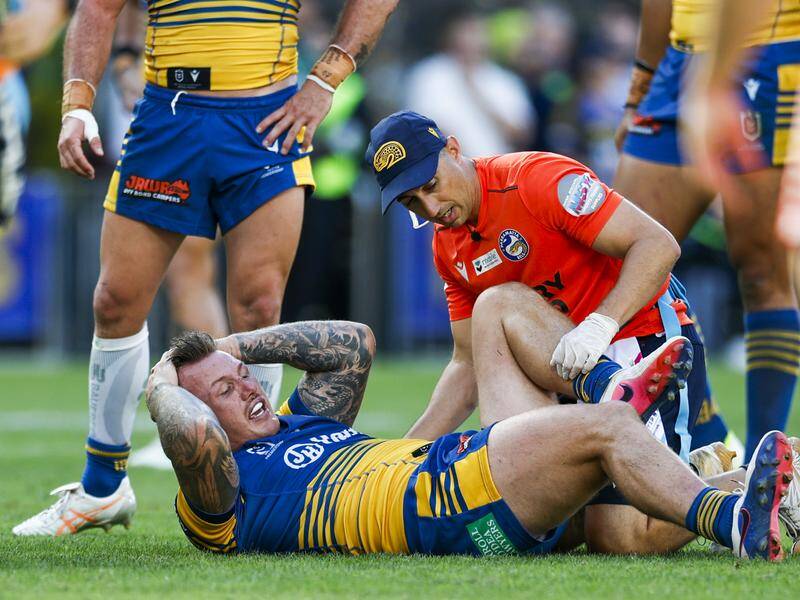
Hip drop consequence
Considering the increased awareness of traumatic brain injuries, CTE and other long term consequences of high impact contact sports; and following on from the serious “At work” injuries to Eli Katoa and Loko Pasifiki Tonga; I believe any shift in focus with regards to player injury management would be more beneficial if directed towards the adequacy of player injury protections in general, rather than focusing only on those that correlate with judiciary matters.
In most professions, when an employee is injured at work, there are significant penalties imposed on the manager and the employer at a State and Federal Level. There are also commensurate immediate and ongoing compensation measures for the victim regardless of whether their injury is superficial, significant, physical, or psychological.
However, professional sports organisations are not bound by these same provisions, and professional athletes are not entitled to all the same federal protections as other professions. Consequently, players must rely heavily on the current judicial process, as well as governing body initiated and personal insurance policies that cover death and severe permanent disablements. These policies do not cover soft tissue injuries, repairable fractures and moderate head trauma where the injury only has a temporary or intermittent impact, even if these injuries are a direct consequence of “the job” and prevent the continuation of the playing career.
The NRL has implemented significant support mechanisms in the past decade including dedicated funds and services for financial hardship, concussion management and medical treatment services for seriously injured current and retired players. Though the support these initiatives provide does not routinely assist with psychological injuries, and the decision on who receives support is discretionary. There are also documented concerns that the discretionary authority can be prejudicial and inconsistent with the approval and application of support services, which could potentially further affect the already under supported mental health concerns of current and former players.
In the ongoing absence of everyday workplace legal protections, players and their families would benefit from the codes governing bodies providing a more consistent and transparent accountability framework. One that assures non-discretional support services and medical assistance for serious injuries during the course of their employment, regardless of whether the injury is physical, psychological, temporary or permanent.
Addressing Code Culture at Club Level
There has been a fair bit of media attention recently regarding disillusioned players, support staff and toxic work environments at high performing NRL clubs. NRL Club workplace culture (with particular reference to Duty of Care) while not consistently reported on, is a prevalent issue acknowledged by RLPA data, academic studies and court records.
Professional Sporting clubs face potential legal action frequently, often dealing with lawsuits regarding player injuries and employer/employee misconduct. High-profile cases, highlight that clubs are becoming more susceptible to lawsuits initiated by employees involving duty of care and workplace culture. It should be recognised and prioritised by all clubs as a proactive opportunity into action and prevention, rather than a retrospective response as required when the shit hits the fan from a PR and legal perspective.
The RLPA released their 2025 Annual Report – The Players’ Pulse last month, which utilises findings from a non-mandatory player survey, to provide insight into player perceptions and overall satisfaction with their club level work environment, addressing the employer/employee component of being a professional Rugby League player in 2026.
The 100+ subjective response items consider game focused components such as facilities, staff, training practices, medical & nutrition services, along with environmental factors including: racism, psychological and cultural safety, wellbeing & education, family supports and work-life balance. The RLPA plan to use the findings to set benchmarks for positive team culture and professionalism while identifying specific functions at club level that are lacking. The report proposes that by offering direct de-identified player insights to clubs, they can influence quality policy-reform, allowing clubs to empower players to make decisions that positively impact their professional paths and personal lives now and into the future.
The Eels faired extremely well in the RLPA Survey, coming in second behind the Panthers for NRL responses and second behind the Roosters for NRLW responses; with scores that exceeded the industry average on items such as Psychological Safety, Cultural Safety, Workplace Environment, Family Support, Nutrition Services and Work-Life Balance from both NRL & NRLW respondents.
However, a large number of clubs scored very poorly and the overall average grade across all clubs highlighted poor performance in Psychological Safety, Workplace Environment and Work-Life-Balance. In addition there were some alarming statistics around the pressures and expectations on players to perform and train when not fit to do so, even during serious injury recovery periods.
While these poor results are not affiliated with the Eels, any impact on the perceptions of the code and rugby league club culture in general, could impact the uptake of Rugby League for future generations, thus reducing the strength and quality of player groups in pathways and at an elite level. Hence, it’s important as a club that they monitor the general environment and adjust operational practices to ensure policies and practices continue at the current high standard.
Game-day Security, Weaponised Haberdashery & iPad Functionality
Ah Game-day event security, a necessary measure of general protection to ensure the safety of participants and spectators at stadium events. I am all for their relevance and presence, but in the theme of this week’s column, I must attest that authority of any kind should be delivered fairly and consistently with an approach to risk that correlates with the nature and intent of any perceived contraband or action.
I digress or more so confess, that on Sunday I nearly didn’t get into the game after “a situation” at the entry gate.
It all started when the lady in front of me was questioned by a bag checker about the reason for the crochet hook in her purse, despite also having a small ball of yarn, a partially finished quilt square and a pattern on her person, not to mention about as much physical strength as a feather in the wind. Regardless the security personnel were not familiar with the nuances of knitting versus crochet and did not believe her explanation was plausible with a singular hook. I tried to advocate for her to no avail, and she was set aside to wait for a more senior security person to assess her situation.

This supporter couldn’t explain his crochet hook
When it got to my bag check I didn’t give it a second thought as I was travelling light and had nothing flammable or sharp on me. Without a direct word, the person looking in my bag gets on their walkie-talkie and says “potential security breach at the members gate” before asking me to confirm “this was my bag” and then questioning why I had brought an iPad with me to the stadium when I “don’t have small children with me that need to be entertained”.
After unsuccessfully pleading with the person that iPads have word-processing capabilities and other professional functions and that I use mine to work in transit, I was a bit rattled. So I zoned out while I waited for the escalation crew and began not only questioning the sanity of 2026 societal norms, but also wishing I knew a small child nearby that could qualify as a defence.
Just as I was about to concede defeat and head to the leagues club downtrodden but free from prejudice, a suited security official responding to the walkie-talkie call-out with a couple of Parra staff intervened. Crisis averted, all contraband cleared, an apology for the misunderstanding and I was in my seat just in time for kick-off, as was my new friend and her weaponised haberdashery.
Genuine thanks to the Eels game day operations team for stepping in and ensuring common-sense prevailed in the end.
See you all Saturday for the battle of the West, sans iPad, to avoid another “security breach”.
Roly-Poly Parra


The article raises a real issue about gaps in workers’ compensation-style protection for professional athletes, but it overreaches by implying rugby league players are left with only the judiciary and a few death-and-disability policies. That is not accurate. Professional sport is still covered by workplace health and safety duties, serious penalties can apply for WHS breaches, and players also have collectively bargained protections and dedicated support funds under the CBA. It is fair to argue the system is still incomplete, especially because some supports are discretionary, but it is not fair to suggest there is no meaningful legal or welfare framework around player injury.
Thanks Tam,
I just wanted to add that while the 2025 RLPA CBA does have improved protections, they are discretionary supports still and the RLPA Pulse Survey and more recent academic studies indicate financial and medical uncertainty is still a key contributor to player mental health despite the additional discretionary protections that the CBA provides.
Appreciate your opinion though, Chris, you’re entitled to it.
The hip drop is a real grey area, you can only have same for same injury to suspension if you determine the malice and intent of the tackler. As Ryles said 99per cent would be caused by fatigue.( Six agains). Also, be very concerned with those ladies with knitting products, their obvious intent is terrorism.
I’m going to comment on probably the least paragraph of importance here but security at the game is a gripe of mine. Last year vs the Tigers I was allowed in with a large stainless steel bottle to keep my water cold. After sitting in the shade during half time of reserve grade I was approached by security to let me know that I had to check the bottle in with coat check or they would confiscate it. After arguing my point I eventually went and checked in my bottle.
For the rest of the year I just went with a regular plastic bottle. This year I froze 3 x 1.25L bottles in preparation for a hot day on Sunday. As I got to the table security had to call over their supervisor and then question whether my bottles would be allowed in. After deliberation by faceless people behind a security camera I was allowed in. Whilst there I discussed with security what is the protocol going forward with water, sizing, frozen etc. They said it changed each week and can change just minutes before the gates open. I’m not one to whinge and complain but when you’re sitting in the hot sun for multiple hours a small cup of room temperature water isn’t suffice. I tried reaching out a while back through commbank stadium channels but maybe the club can initiate contact and send out each week what is permissible with regards to water. Or maybe they can just make 1 rule and stick to it?
A positive from Sunday at commbank was behind my bay in front of the men’s toilets was a sunscreen dispenser. Although I had brought my own this is much needed for the palest of people such as myself. I would like to see free sunscreen dispensers in front of all the toilet blocks across the stadium.
One rule and sticking to it would be helpful. I often have my iPad or work laptop with me especially if it’s a night game as I am coming straight from the office. They insisted the Terms of Entry had changed at first but then said you can only have a tablet if you have a child with you. Drink bottles should be allowed in my view. As long as they don’t have grog in them. And Ham sammiches too if that’s your preference.
I was pulled up and told I could not enter the stadium with McDonald’s.
After looking in the bag and seeing a small hamburger they waved me through only to be approached again by security for the same hamburger
I thought we were allowed to bring our own food in. A maccas burger will do less damage than a crochet hook although might make a bit more mess. It wouldn’t bother me so much if they didn’t allow for cigarette lighters. I do understand the crochet hook could potentially be a weapon in the wrong hands, but it won’t set you on fire.
Rocket, Did you also have the paper tray liner in your bag? As it would make sense that they would be worried you might be intending to use that to flick your pickle on the field at a player!! :p
Do kids still flick the pickle on the Maccas ceiling using the tray liner, or is that an old school thing?
The reason they don’t want you to bring takeaway in is because of the food outlets at the stadium . I read part of the story to my daughter and now she keeps threatening me with her crochet hook.
Nothing like an over reaction. Let’s hope they don’t behave like the ICE agents in the States and grab you for the most innocuous things. Is this place losing its innocence? I hope not! And, why do some contributors resort to name calling because they disagree with someone else’s comment – very disappointing.