
Hey Parra Fans, Welcome to this week’s issue of TCT Golden Point: an “in the news” focused weekly column about all things Parramatta Eels and Rugby league in general. This weeks piece focuses less on what’s in the news and more on the impact that the scoreboard and the media (social & mainstream) are having on our psyche as fans and how the theories behind “learned optimism” might help. As always, I hope you find it interesting and engaging.

Finding Optimism in Adversity
There’s a moment in every season where results stop being just results and start becoming something more dangerous—a narrative. Right now, that’s exactly where the Parramatta Eels find themselves. Not buried, not flying, just hovering in that uncomfortable middle ground where every error feels heavier than it should, and every missed opportunity carries a familiar sting.
It’s not just what’s happening, it’s how it’s being interpreted, by fans, the media, and potentially by the players and the coaches; particularly if they’re paying too much attention to the negative and often goadingly emotive components of fan and media commentary. After a positive finish to 2025 and a promising pre-season, how did we get here so quickly? And how can we move past this sea of negativity and find optimism in adversity.
Whether you like or despise my propensity to bring academia, organisational psychology and/or legislation into my TCT contributions, you’re here now, so please indulge me with the opportunity to explain how finding optimism in adversity using Martin Seligman’s 3 P’s of Resilience Framework, might be the key to us all getting through 2026 in one piece.
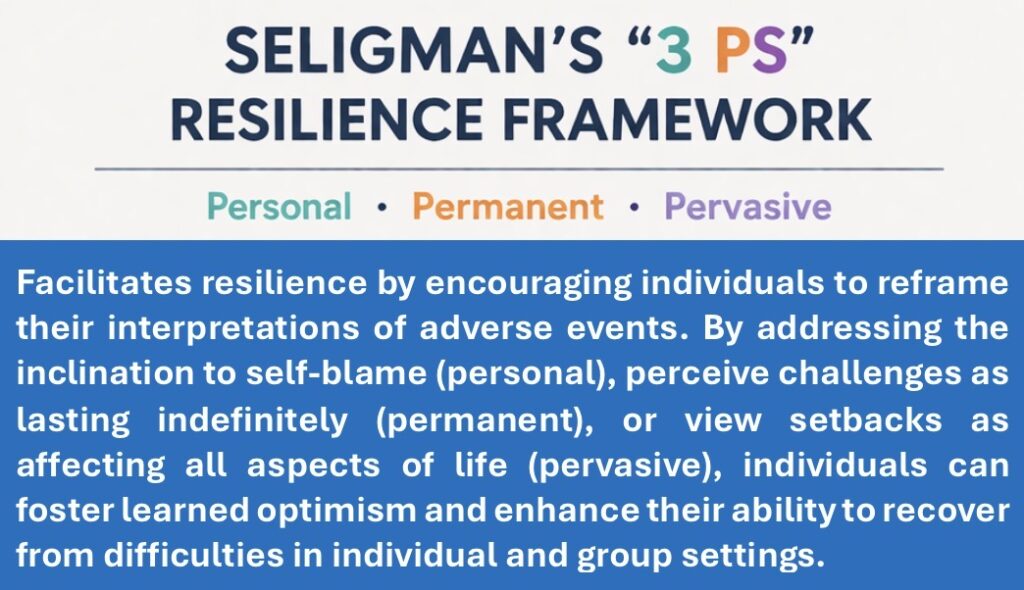
Seligman, M.E.P, 1991. Learned Optimism
The “3 Ps” for Parra Fans
Whether you’ve fought through the opening rounds without crumbling or not, if you’re anything like me you’ve probably ridden the full emotional spectrum already: Hope, frustration, glee, optimism, doubt, devastation, disappointment, it’s all there sometimes in the one game. Because four rounds into the season the Parramatta Eels aren’t the only ones under pressure – the fanbase is too.
If you’ve spent any time reading, watching or listening to the post-game fallout online, on the radio or in-print, you will have noticed that many reactions aren’t assessing the playing group as a collective, in the moment, or silo’d to the specific loss, decision or error. They are presenting as personal, permanent, pervasive reactions that are at times not remotely correspondent with the issue at hand.
Personal (Personalisation): “It’s on us – or them – or each other”
It is human nature/instinct, to assign blame. While we have seen patches of strong attacking football so far, they have been overshadowed by costly preventable errors, defensive lapses, and the inability to remain composed when momentum swings. Injuries mean new and unfamiliar combinations that are leading to hesitation or poor decisions under pressure. The psychology is simple: fatigue impacts motivation and morale leading to errors late in sets, missed tackles close to the line, and last-play options breaking down. It’s just one loop on the rollercoaster of professional team sports.
Win or lose it’s a collective effort across the team in most instances; yet fans and pundits are tending to zero in on specific team members and leadership decisions. From the stands (or the comments section), the anger and frustration in the moment is understandable and hard to contain. But it’s starting to extend well beyond the full-time whistle and with a concerning level of ferocity more commensurate with what I would expect a brazen criminal might be subjected to outside court rather than a young adult who dropped a high ball or threw a bad pass.
It doesn’t take a lot to set us off at times either. A missed tackle, a clunky set, a poorly timed pass, and instantly any positives are forgotten and it’s got to be on someone. The halfback, the coach, the bench rotation, take your pick. I guess it’s instinctively easier to say “we lost because of him” than to sit with the reality that rugby league can be messy, momentum-driven, and that results are rarely decided by one moment or one game even.
Yet here we are, just four rounds in, and the narrative has already shifted from teething issues to target practice; and it’s not just media on team, fan on player and fan on club, it’s also fan on fan, particularly on Social Media. Sure, it’s part of the parcel as a fan to voice a subjective opinion, rate player performance, get in on the game day banter and even have a bit of a laugh at the overall situation as a coping mechanism. But in recent years there appears to be an increase in genuine unprovoked and often threatening abuse by fans towards the playing group, club and other fans, simply for having different views and values.
Being a Parra fan can be tough. The round-to-round rollercoaster is emotionally draining, and we are all human. Turning complex high-pressure team outcomes into something attributable to a single cause or person is not healthy for us as a fan group or for the team. Even if sometimes there are elements of truth to the narrative, often it’s as much about opposition quality, game flow, or tough calls as it is form, defence and discipline.
That’s personalisation, and it’s happening at alarming rates and speeds.
Personalisation = Finger-pointing – Blame – Uncalled-for Aggression
Permanent (Permanency): “Our season is over”
“Same old, same old” – “We will never be a genuine contender”
This is permanence creeping in. The belief that what we are seeing now is locked in for the whole season. But rugby league seasons aren’t static, form swings are par for the course (with a young side especially), combinations can click late and injuries can shift trajectories. What looks like a defining flaw in March can be a forgotten footnote by August; teams that look disjointed in round 4 can be dangerous by round 20, and true contenders by September.
Early trends aren’t final verdicts, they’re just data points, yet after only a couple of inconsistent performances, suddenly it’s not a form issue—it’s an identity. Four rounds, that’s all it takes to turn a snapshot into a season-long verdict. But seasons don’t work like that, they stretch, evolve, correct themselves. Calling it now isn’t insight or being a realist, it’s impatience dressed up as certainty.
This is where short-term form starts borrowing from long-term memory. Past seasons bleed into present moments. Close losses don’t feel like coin flips—they feel like confirmation. But repetition doesn’t always mean permanence. Sometimes it just means the lesson hasn’t landed yet. The danger is when that belief disappears. Because once a group starts expecting the same outcome, they often get it—not because they can’t change, but because they stop believing they will.
Permanence when drenched in negative aggression is a psychosocial and cultural hazard for fans, clubs and players alike.
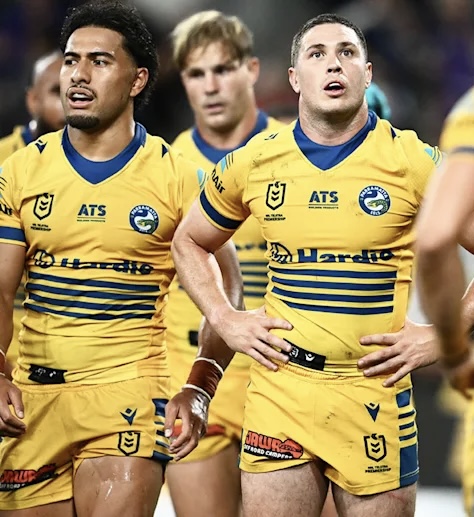
Permanence = Heads down, dejected stares, hands on hips.
Pervasive (Pervasiveness): “When One Problem Becomes Every Problem”
This is where the consequences of the first two P’s manifest; and before you know it, a poor defensive set is evidence that everything is broken:
- An unforced error turns into a player commitment issue
- An attacking misfire turns into a recruitment, coaching, systems issue
- Different views and beliefs between fans turns into obtuse anger and aggression.
The problems don’t stay in their lane, they spread, and before long, the entire club is characterised entirely through the worst 10-minute patch of football from the weekend and the fans are labelled as a collective based on the actions of a minority.
That’s pervasiveness, it’s where accumulated frustrations turn into a full-blown narrative collapse by letting a few specific performance issues bleed into the entire story/plan. How did we get here so quickly?
The good news is: Not every issue is systemic and most issues are fixable.
The Reframe: Supporting Without Spiralling (The Reality Check & the Fan Test)
What Seligman’s framework offers isn’t blind optimism, it’s perspective. For fans, that means:
- Not every loss needs a scapegoat (Personal)
- Not every trend is set in stone (Permanent)
- Not every issue defines the whole fan-base/team/club/season (Pervasive)
And that matters, because being a supporter isn’t just about results; it’s about how you ride them.
For mine, the squad looks like a side still figuring itself out rather than a side that’s irreparably broken. That’s not ideal, but with a 50/50 win-loss ratio after playing 3 of the top four clubs in the first month of the season, it’s also not a crisis; it’s early-season football.
They’re a team still searching for rhythm, with considerable inconsistencies, yes. But there are also flashes of brilliance that suggest there’s something there if it clicks. There are formidable signs, patches of cohesion and moments of control, that exhibit markers for positive change as the season progresses.
The question isn’t whether fans will or should react to the good and the bad. Of course we will and of course we should. The question is whether those reactions help build belief, or bury it.
Every season, teams get tested. This year, it might be the fans’ turn first. Because the challenge isn’t just what the Eels do next—it’s how quickly the people watching decide they already know how it ends.
Simple in theory, more difficult in practice, but ultimately possible.

PARRAdise is still possible
Final Thought
Supporting a club like Parramatta has always required resilience. Maybe now it requires a bit of psychological discipline too.
Because sometimes the difference between a season unravelling and a season turning around starts with how we as fans choose to perceive and interpret what’s happening on the field and in the club, how we as fans react to the results and towards one another.
Our support (appropriately critical, emotive, and praising) drives player performance. Our online actions drive player engagement with fans and influence the perception of Parramatta fan culture to potential members, the Rugby League community and the general public; as well as what is and isn’t acceptable behaviour from a club/fan culture perspective.
One of the most valuable assets about our fan base is it’s depth & diversity. Eels fans encompass every demographic in Australia (generationally, culturally & socio-economically), and can be found across every State and Territory and around the world. Few clubs can make this claim, Let’s shift the focus away from our differences and band together to help get our club, our team and our season back on track.
See you at the club for the pre-game event on Monday*
* If I don’t eat too much chocolate and Hot Cross Buns, slip into a food coma and remain that way until 6pm, like I did for the Easter Monday game last year.
Roly-Poly Parra


An interesting read and a timely bit of advice.
Crikey that’s a mouth full. Maybe if they tackle with more resolve and attitude in the first half an hour would put them on their way.
Thank you so much Roly-Poly for this thought-provoking edition of your valued TCT Golden Point series. Moments before I read this I was thinking it’s important to remember nobody is trying to harm Parra, everyone involved at Parra is trying to get a winning team on the paddock. We live in the Age Of Opinion, a horrible anti-social media app age, where without the humanising element of face to face dialogue it’s easy to get drawn into the 3 Ps vortex when it has momentum. Also, it’s terrific, win or lose, to be part of that diverse fan base, especially for fans like me who have a Buddhists-like ‘Life Is Suffering’ ethos – Parra and I travel well together 😉
So well said by Rolly Polly, so much season to go with a young squad still finding its way. Expectation can kill a season as much as encourage.
We need to be patient and give the players we have a chance to improve as I am sure they will. Are they a premiership side at this stage, no! Can they develop into one, time will tell but remember there are 16 non premiership sides each year and that will increase in the next couple of years.
The current Parramatta side has its faults and no side is perfect (maybe Penrith but look how good Parramatta were in the 2nd half against them). I believe the side is moving in the right direction, in my limited opinion!
Well written, well researched, well timed.
Thoroughly relevant and thoughtful read and another reason that The Cumberland Throw is the best sporting site and puts professional journalists to shame.
You’d never see an article like this in the the national papers, more’s the pity.
Thank you for your work.
To buck the trend of the comments – and notwithstanding a well written and valid thought piece – it’s the way Parra is going about its business that is draining the fan base. And it’s not just 2026, or 2025, or 2024. Hell, even in 2022, the season was an unconvincing roller coaster – a team that looked like world beaters for 10 mins, and then spooners in the next 10.
I’d analogise to golf – for anyone who plays the game, an amateur should have a good understanding that the gross or net score is less important than the way it’s constructed. I’d rather shoot a good 83 than a bad 78. The same is true for rugby league. Our lives don’t depend on it. The sun will always rise the next morning. But when your team is seemingly incapable of learning lessons, constantly makes basic errors, and at best “hangs in for scrappy wins”, it’s a hard watch. Over the first 4 rounds, to my eye, we’ve probably played no more than 40 mins of good football, across 320 mins of game time. It means you spend more time with your hands in your face and shaking your head than you do enjoying what’s on offer.
If the rest of the season is a linear extrapolation of what we’ve already seen (and it obviously won’t be) then we are a chance to make the finals. But we will be making up numbers at best. And it will mean that about 15% of the season will be a good watch.
This doesn’t mean I won’t support the team, go to the games, read/listen to TCT. But f-me this team is hard work. And fans shouldn’t be admonished for feeling this frustration.
“And fans shouldn’t be admonished for feeling this frustration”. Wow, I certainly didn’t get that from the piece! I guess it’s open to interpretation, but jeez that’s a harsh one MickB. I think you’re sharing the thoughts of many, perhaps most, Parra supporters so thank you for speaking up and keeping an article about perspective balanced with your fair assessment of the season so far. Hope your long weekend is going well and finishes with an Eels victory.
I like most Parra fans, feel and appreciate your sentiment. However I think this article hits the nail on the head in terms of what’s needed to succeed for Parra.
Confidence and belief is key, and anything that gives players a more confident positive can do attitude, will help the Eels season.
Psychology, or sports psychology in this instance, manifests not only through the coaching staff, and in house practice, but plays out in the media on TV, and in this day and age social media.
I’m not saying fans shouldn’t Kick the cat after a poor performance, or have a right to voice frustration, but I think a glass half full attitude from fans at this stage is what will help our beloved Eels !
Brilliant column as always, glad you’re writing for us Parra fans.
That’s the emotion of being an Eels fan, sometimes we get fired up and carried away but for the most part it comes from a good place.
People just need to remember it’s a game and refrain from personal attacks on players and staff, they are only human too.